The challenge
Since the Crown Land website went live, the team had been fielding complaints from internal staff and external users who couldn't find the information they needed. The proposed solution was an FAQ section.
The real challenge wasn't designing an FAQ. It was validating whether an FAQ was actually the right answer to the underlying problem — and if so, what kind of FAQ users would actually need.
My role
I led the research and design end-to-end across two phases.
Research planning — learning goals, target audience, and methods defined for each phase
Moderated user research — interviews and usability sessions with 16 participants
Prototyping — high-fidelity interactive mockups for testing
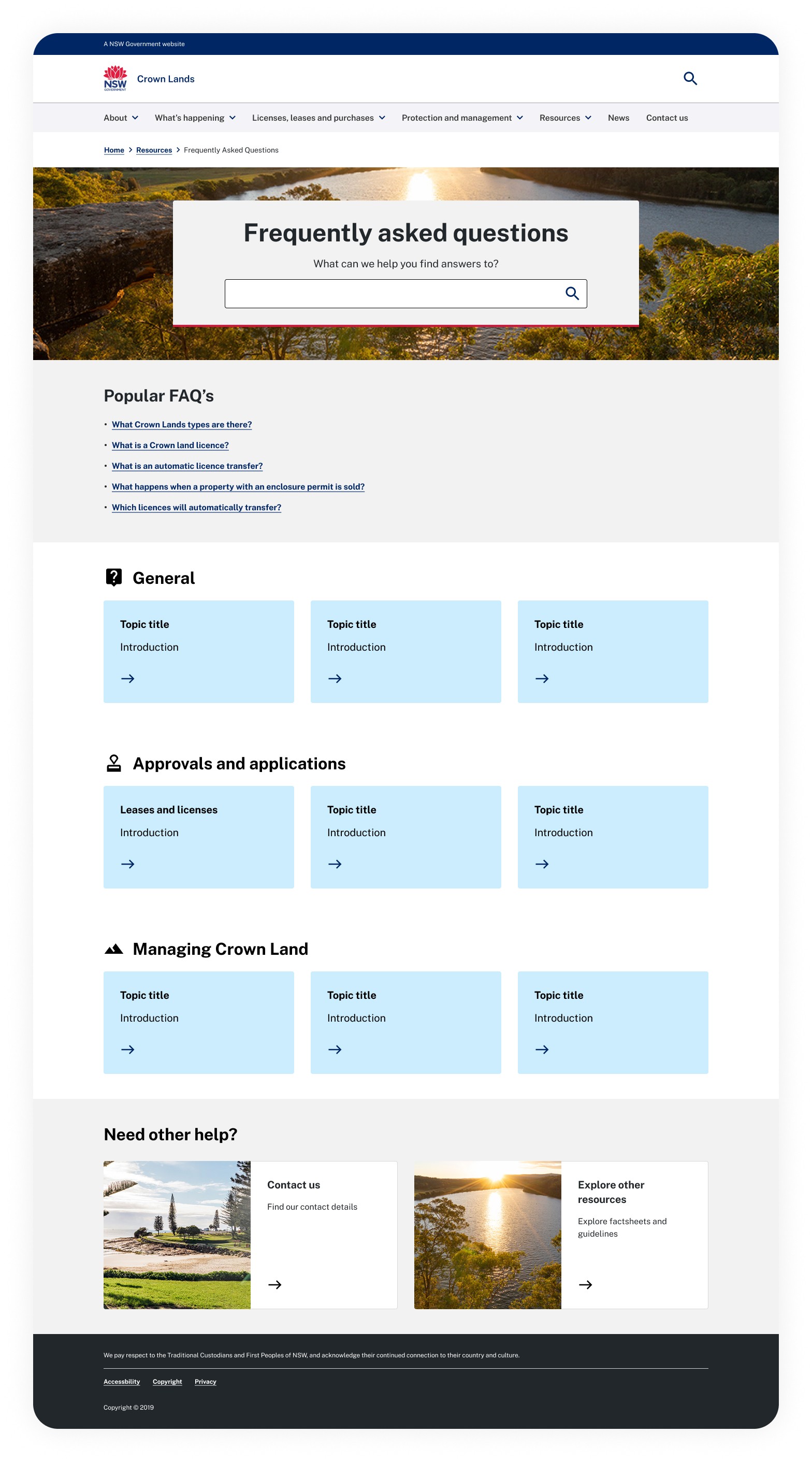
Synthesis and design — a prioritised FAQ structure and interface, drawn from research insights
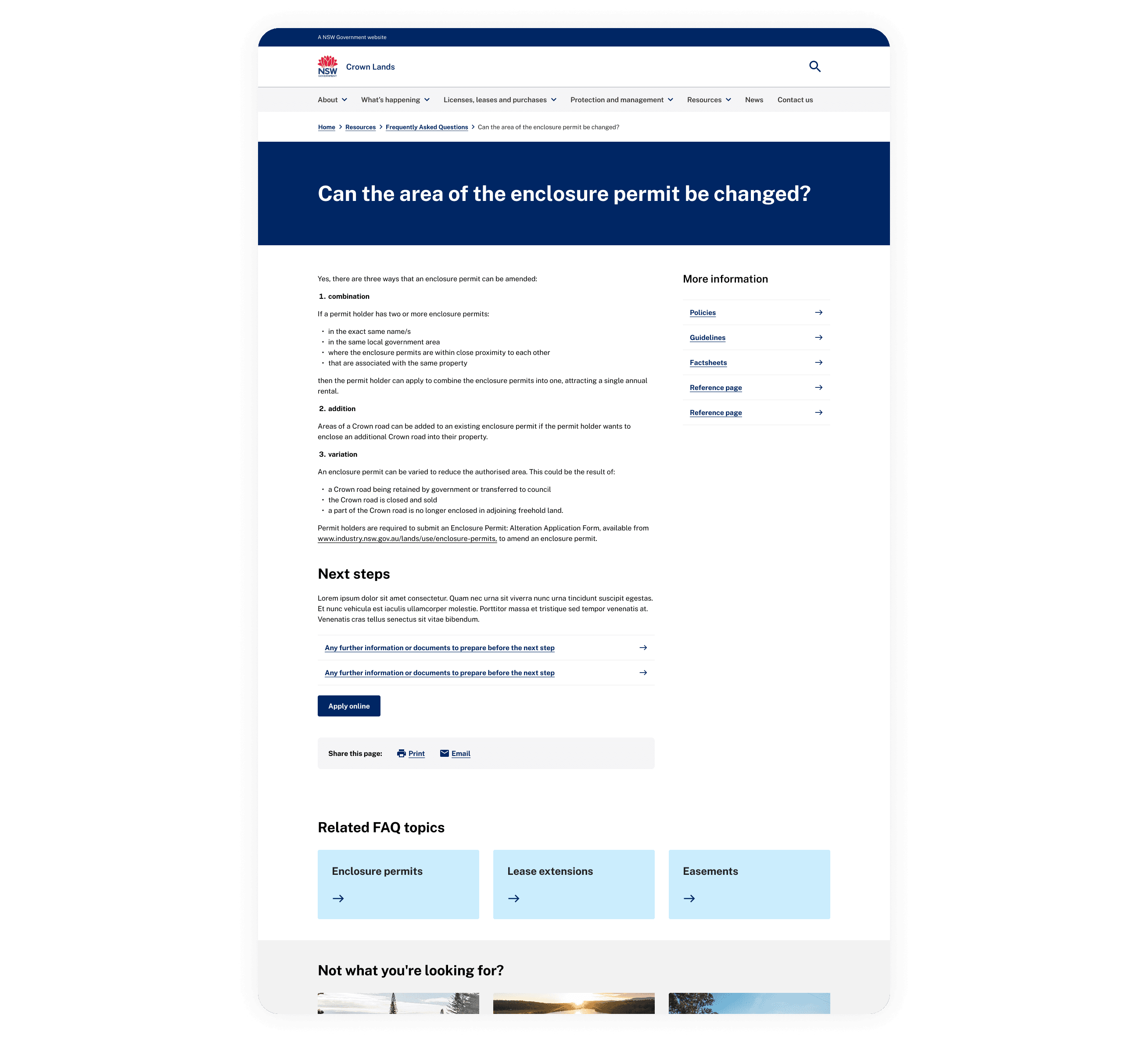
How I approached it
I used the iterative Double Diamond process precisely because the team needed to know whether an FAQ was the right answer, not just how to design one.
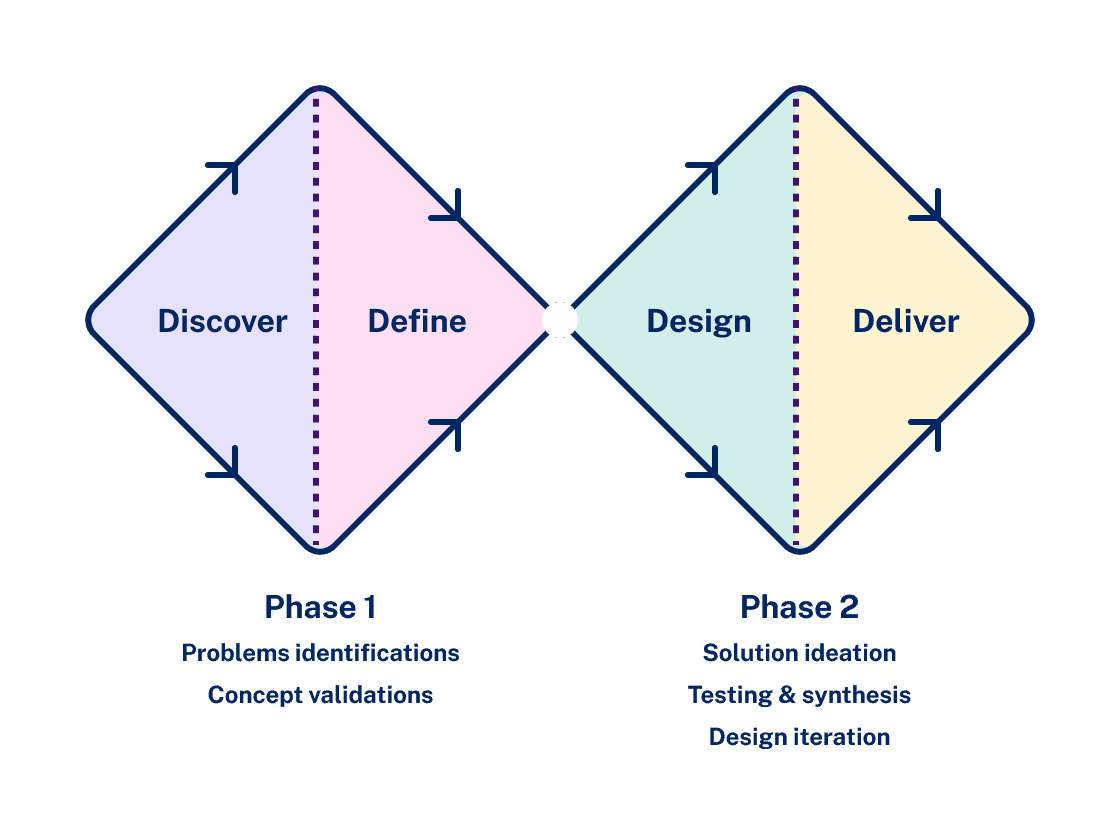
Learning goals:
Current user journey and pain points
Value proposition of an FAQ section - Is this a useful feature to users?
What are our target audience’s expectation of it?
Discoverability - How can we raise users’ awareness of this available resource
What I learned
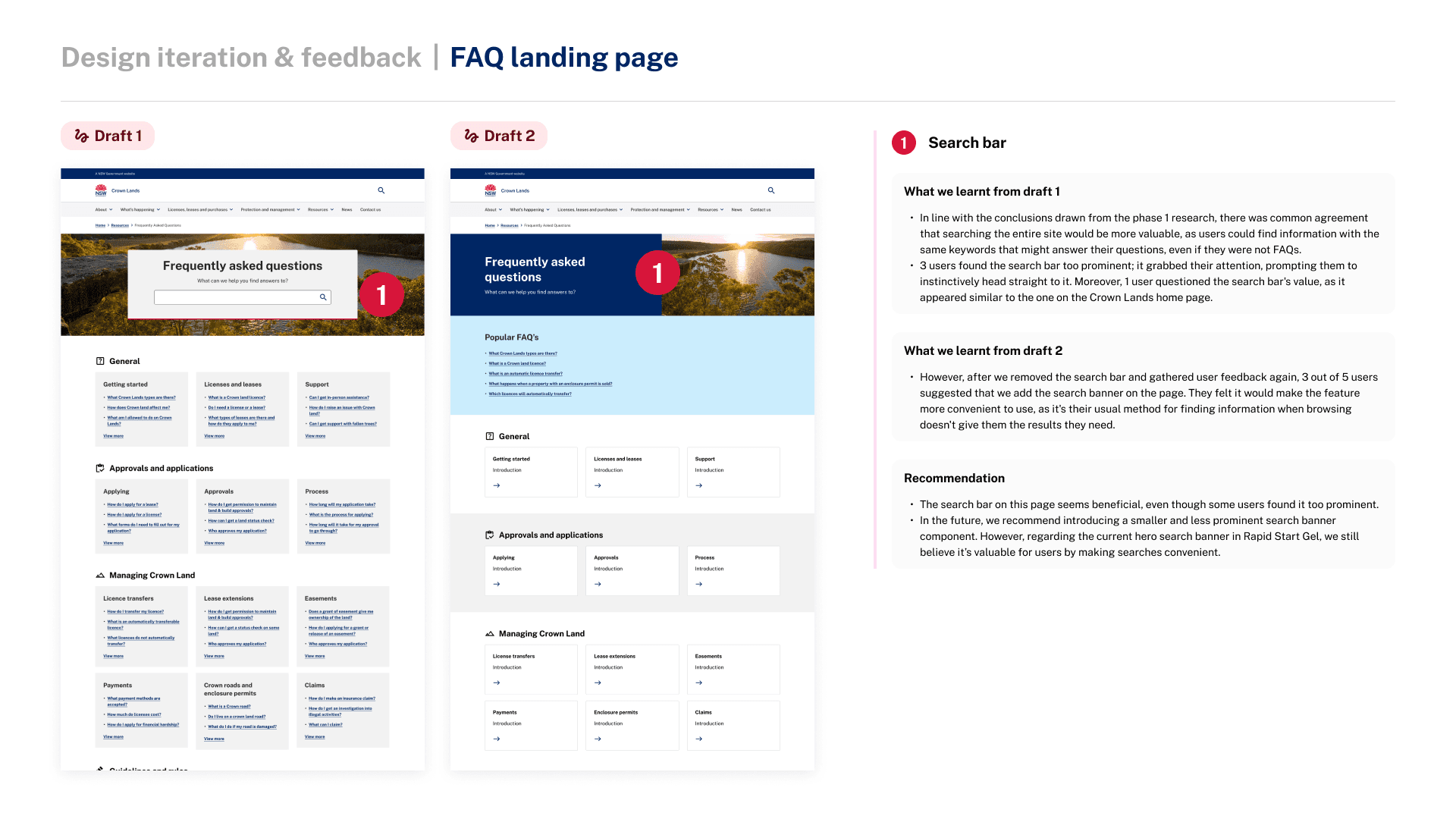
Both external users and internal staff confirmed the value — users wanted quick answers in one place, and the team wanted them to find those answers without calling. Expectations clustered around four themes: speed, central location, interactivity, and reduced support load — which set the brief for phase two.
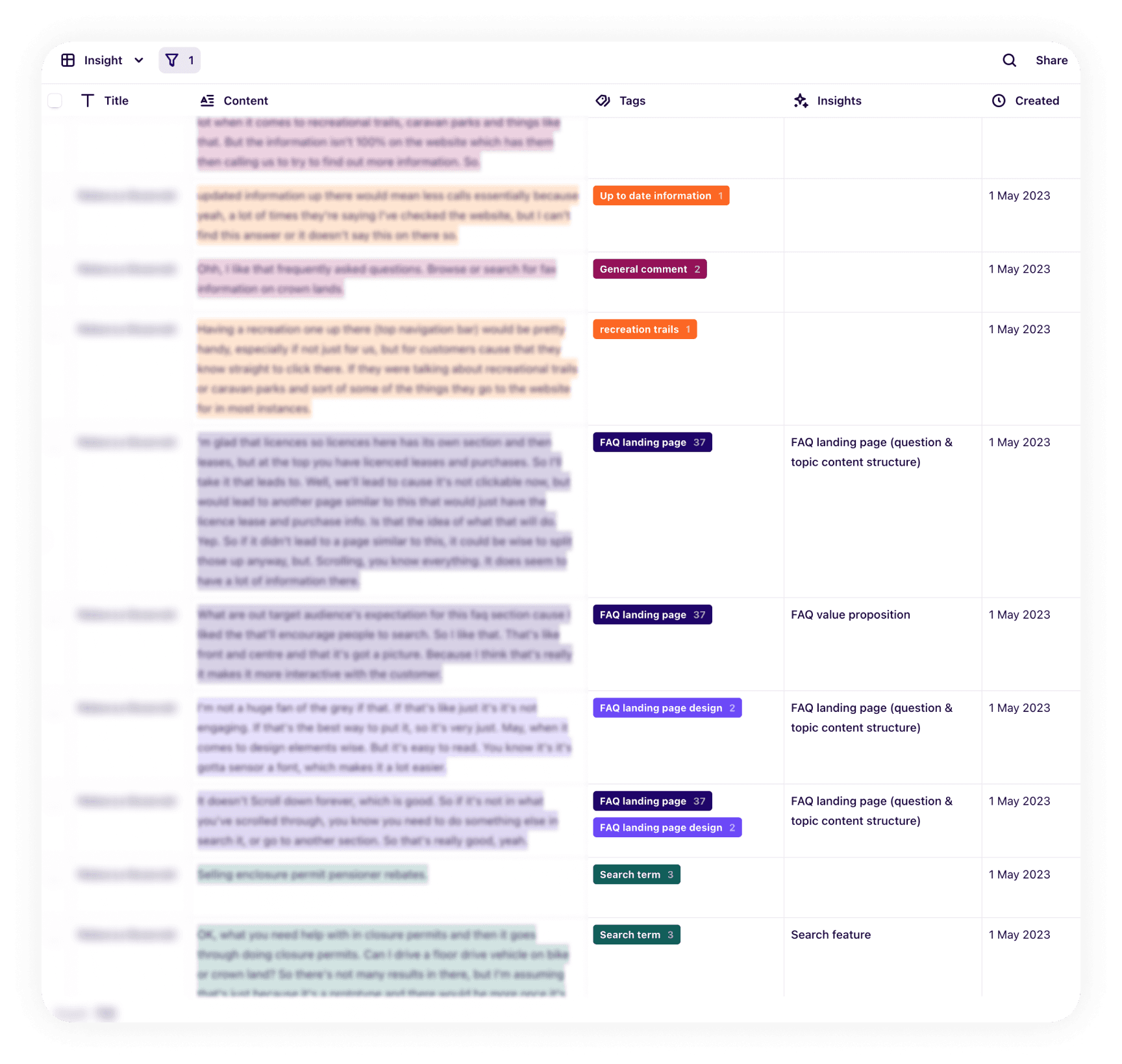
Learning goals:
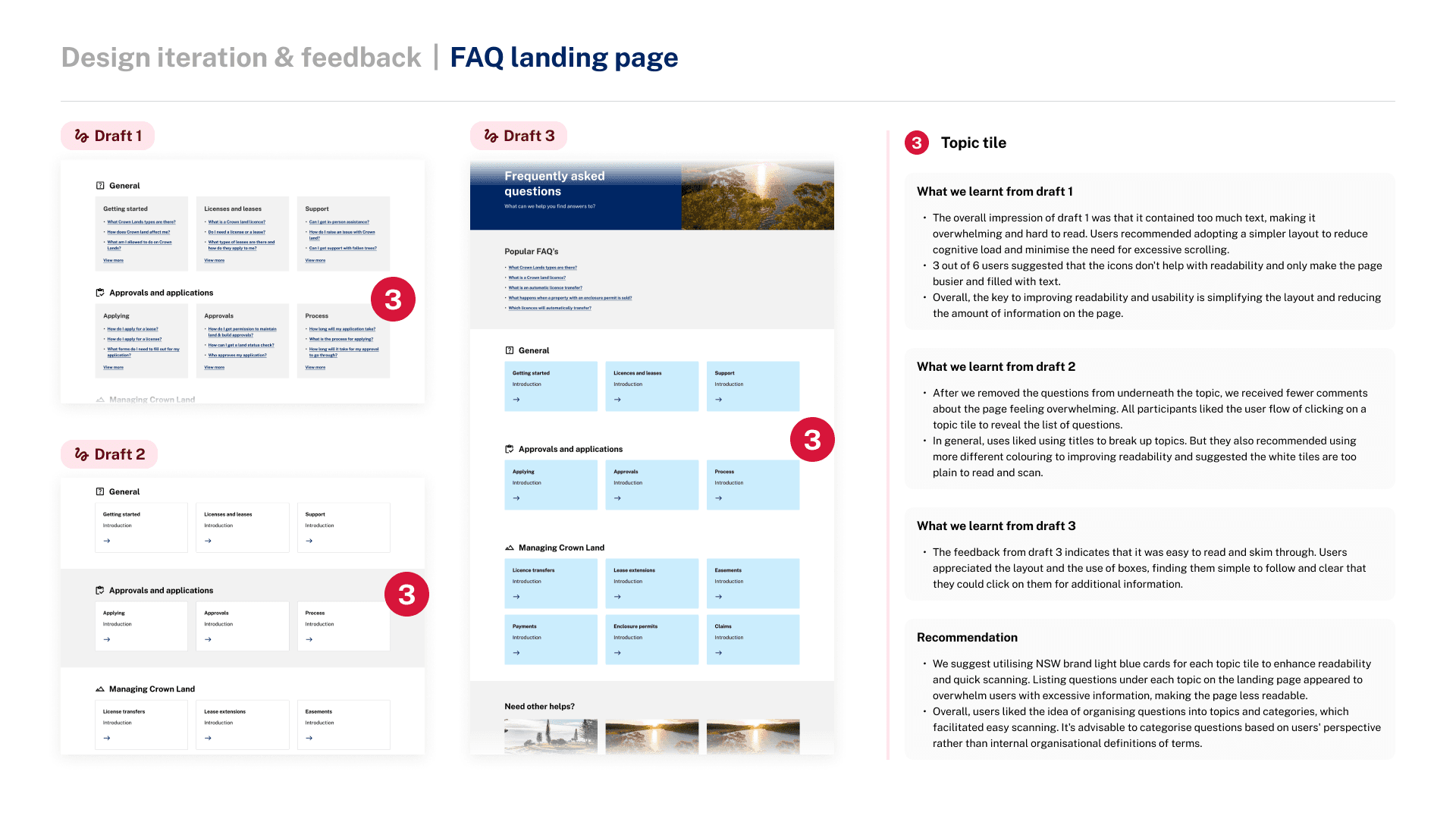
Readability - Is the page readable
Usability - Is the page easy to use and follow
How to best fulfil the value proposition discovered in phase 1
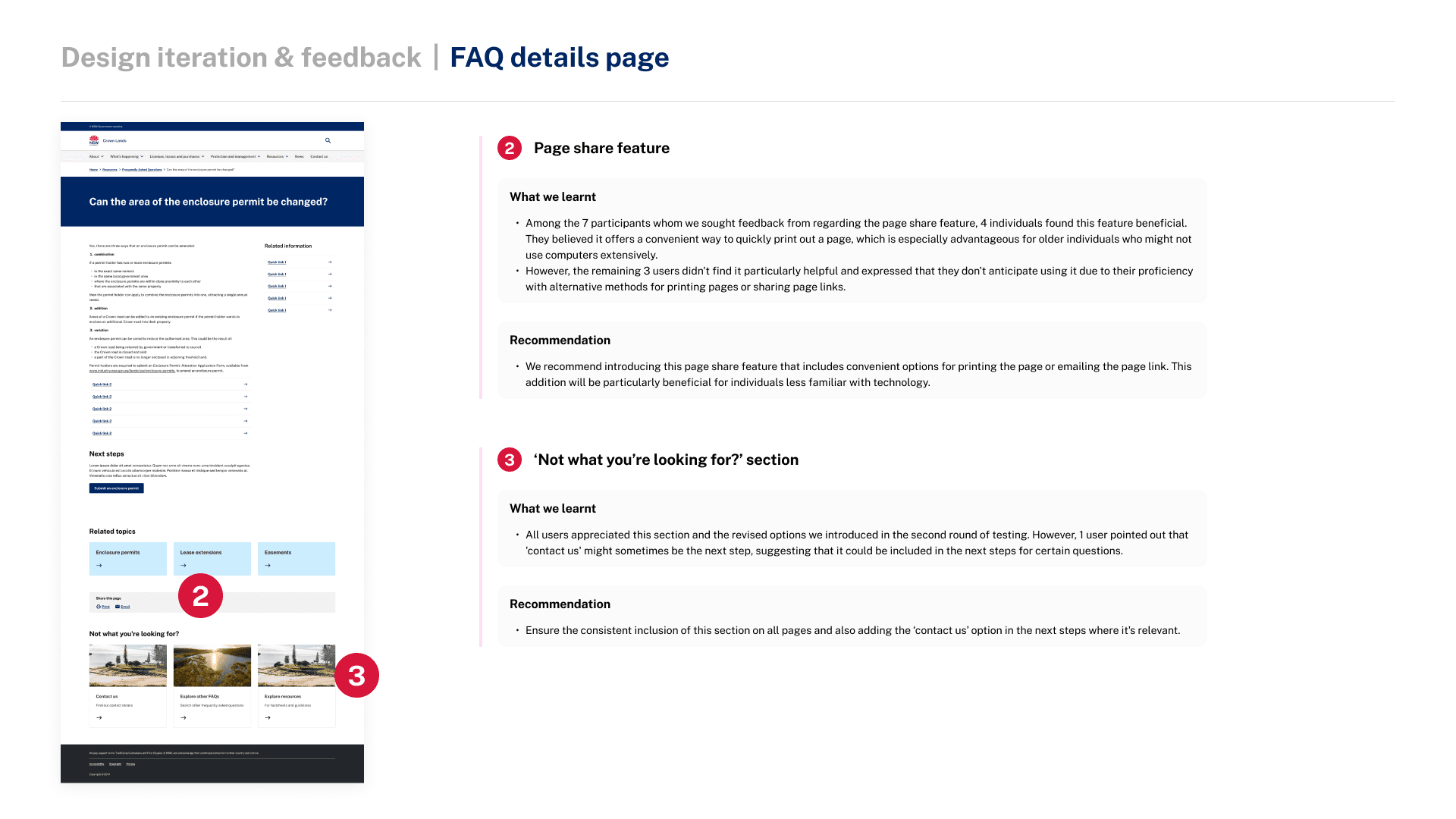
What I learned
Testing confirmed the FAQ delivered on the brief — and surfaced things the design hadn't anticipated. Two new features came out of the sessions (page sharing, and predictive search with contextual results), alongside content and structure guidelines (plain language, task-based grouping, ≤6 topics per category) that became the spec for what to build.