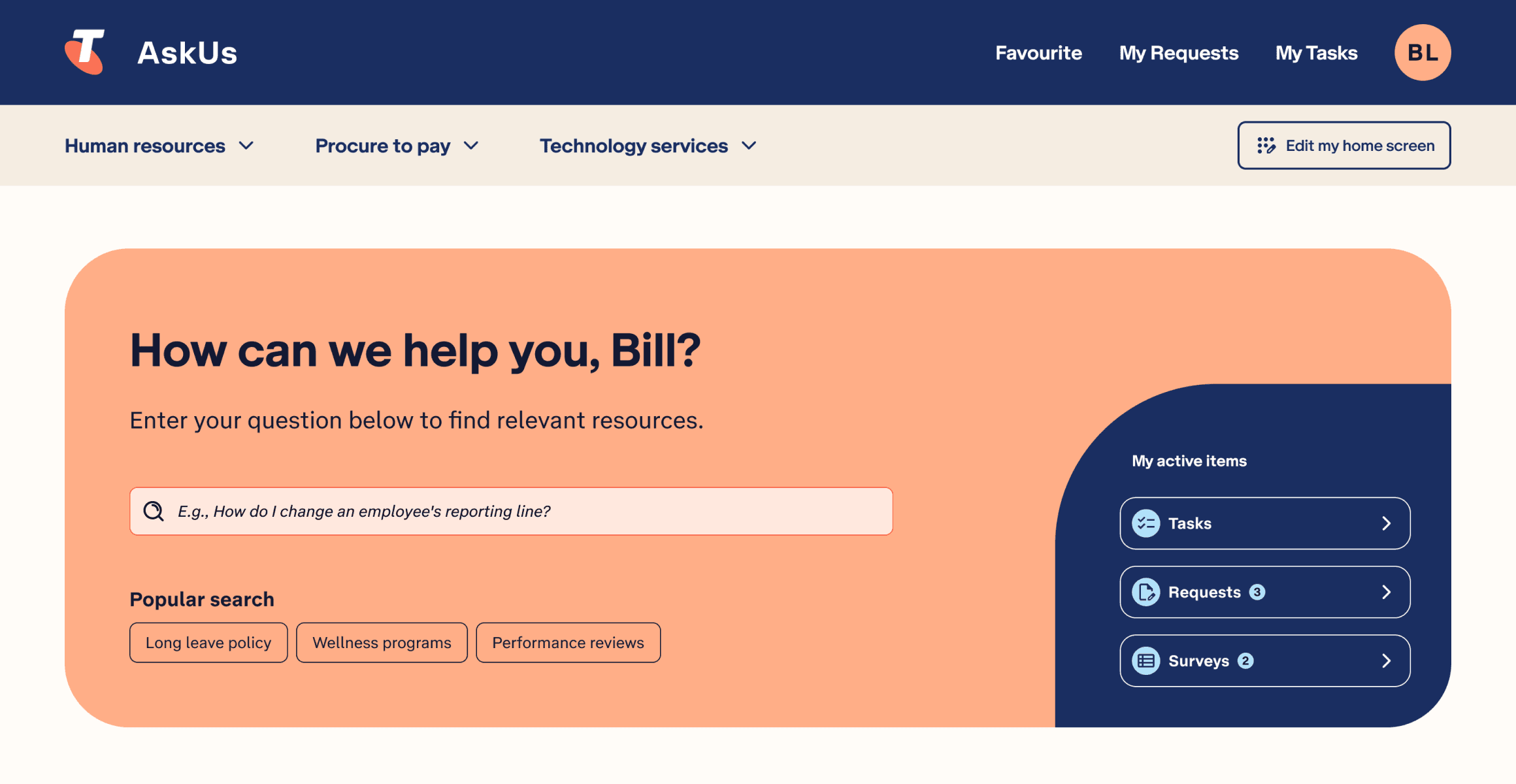

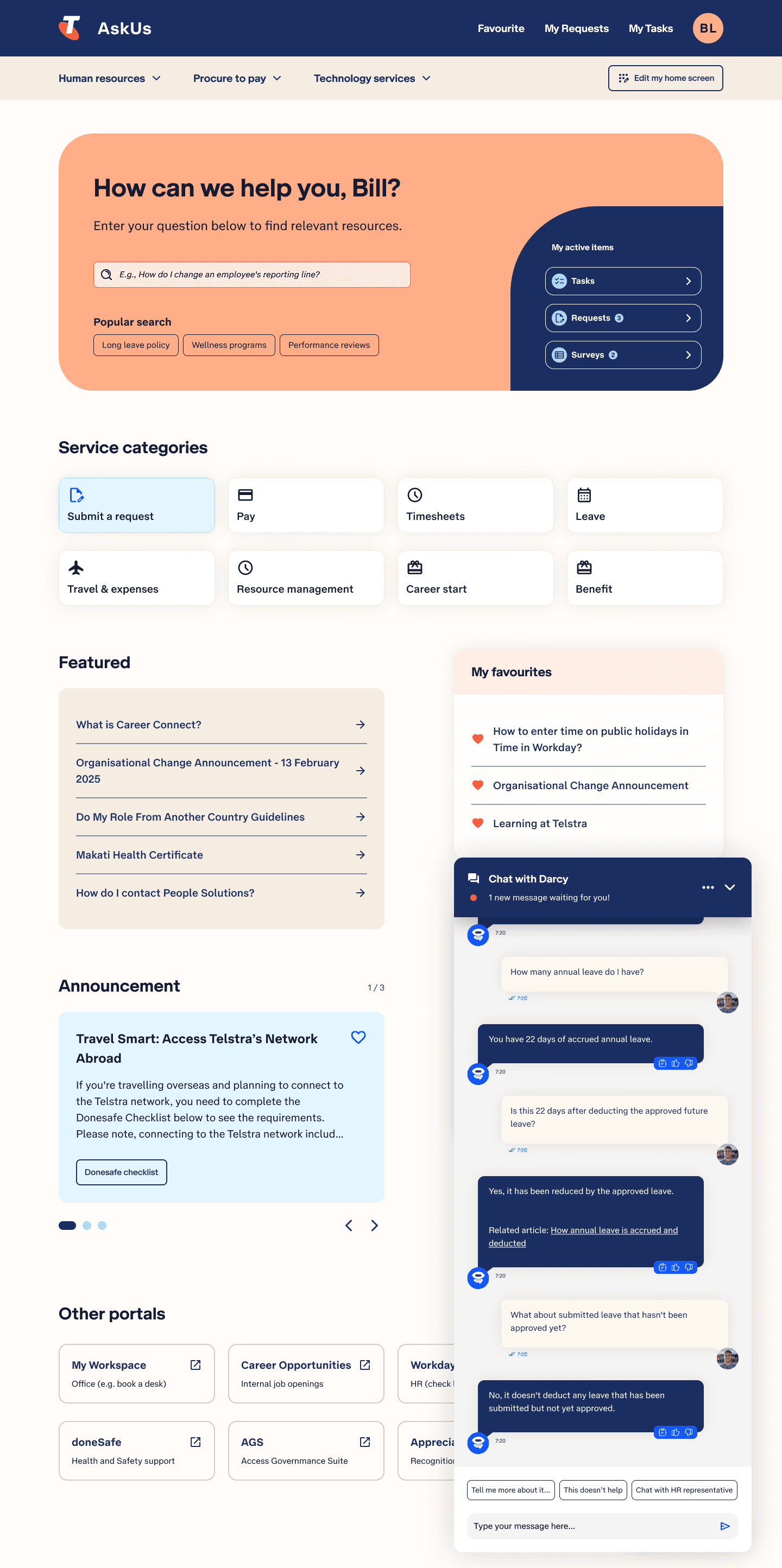
AskUs is Telstra's internal employee service platform — used by staff to access HR information, raise tickets, and chat with support agents. Adoption was low and the experience wasn't meeting efficiency or satisfaction expectations. Self-service wasn't really working, and the platform had to serve a workforce that's wildly varied: office staff at desks, retail staff between customers, field techs on tablets, contact centre staff on rosters, and international employees with their own regional policies.
The real challenge wasn't fixing the front end. It was understanding why the platform wasn't earning user trust in practice, and identifying which moments of friction actually shaped whether people stayed in the system or worked around it.
I led the research and early-stage design as the sole researcher on this stream.
Research design — recruitment plan covering nine distinct user groups, mixed-method approach combining one-on-one interviews and focus group sessions
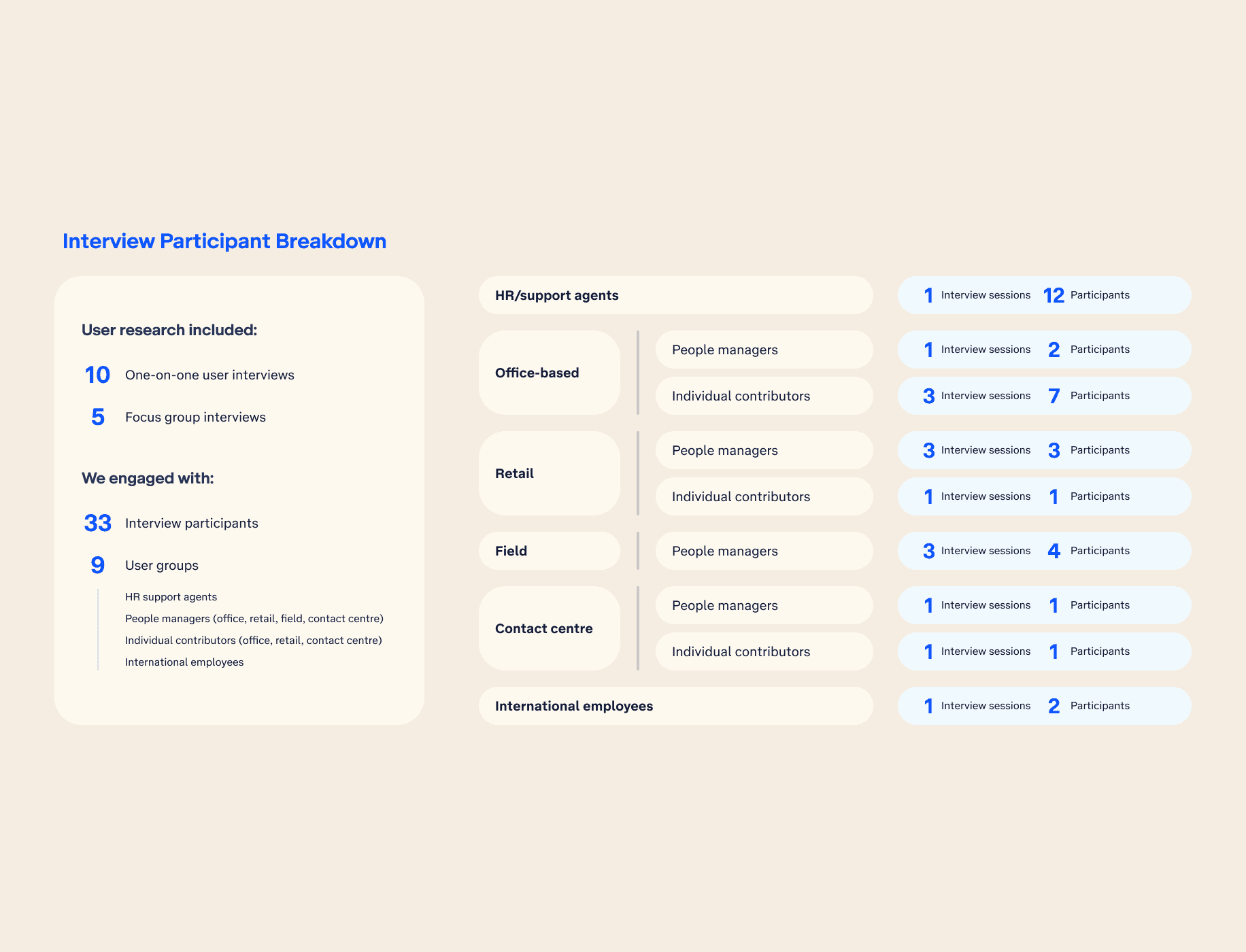
User research — 10 one-on-one interviews and 5 focus group sessions with 33 participants across HR support agents, people managers, individual contributors, and international employees
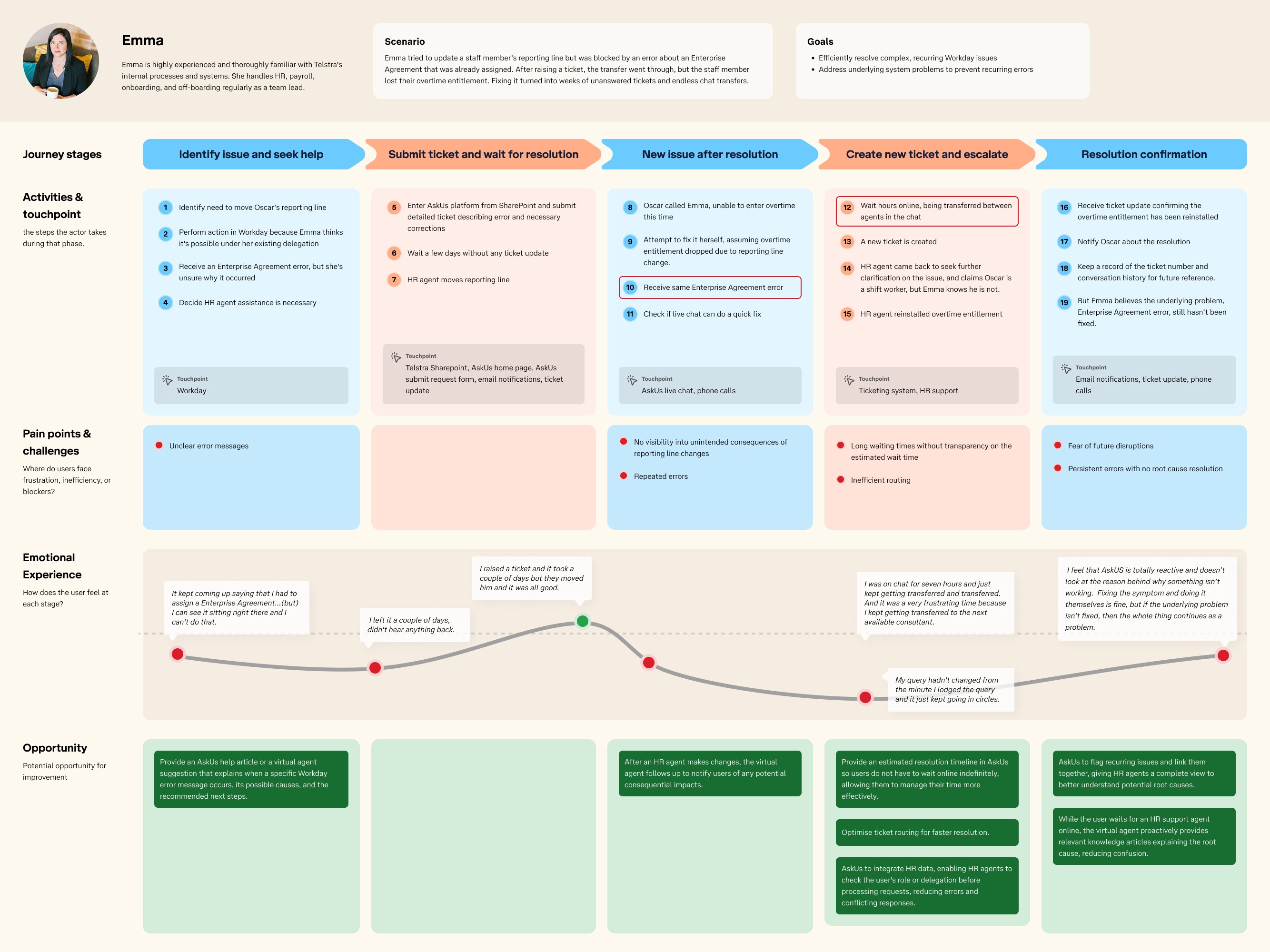
Synthesis and journey mapping — qualitative analysis in Dovetail, three distinct journeys mapped by user familiarity and intent
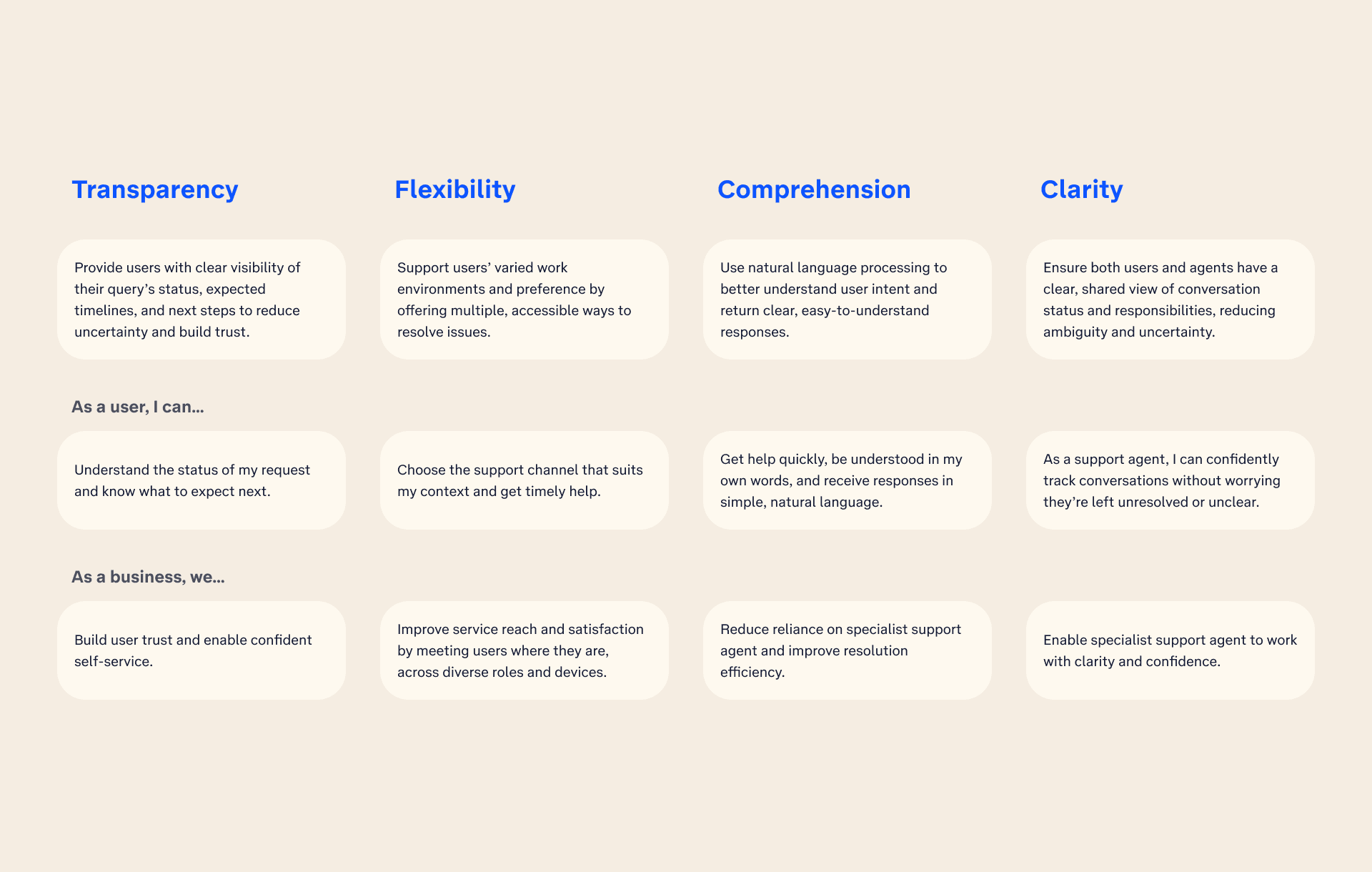
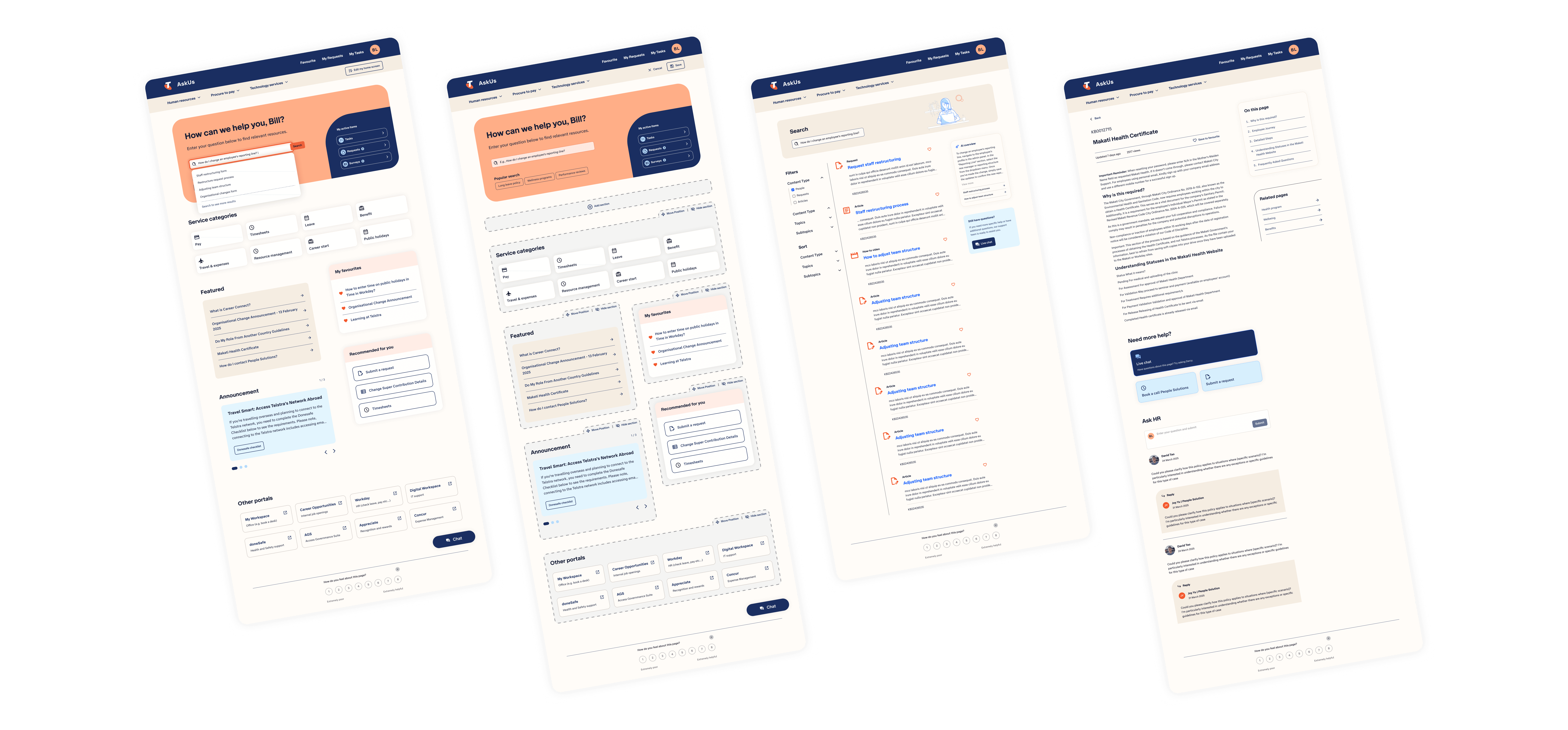
Recommendations and design concepts — 13 prioritised recommendations grouped by impact, wireframe concepts for high-impact areas, and a set of design principles to guide future iterations
The platform serves wildly different working contexts, and a research pool weighted toward office workers would have missed most of the friction. I recruited across nine user groups deliberately so the findings would reflect the real shape of the workforce, not just the loudest segment.
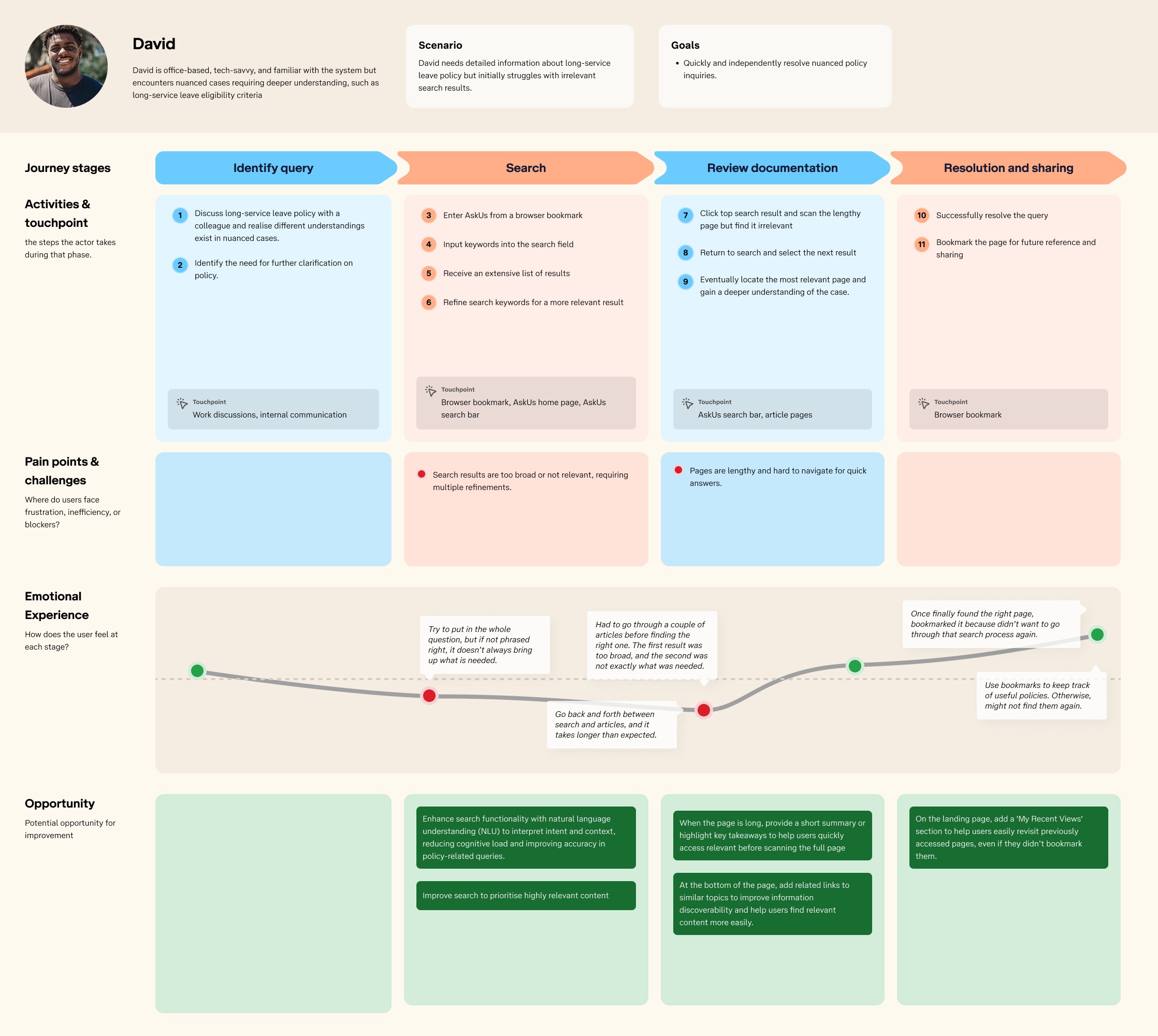
Rather than synthesising to a single average journey, I mapped three distinct journeys based on user familiarity and intent: chat-first (less experienced users seeking reassurance), search-first (confident users with quick general questions), and ticket-first (experienced users with complex needs).
Each surfaced its own critical pain point, which made the recommendations easier to prioritise.

I delivered 13 recommendations, each tagged high, medium, or low impact. This gave the client a clear sequence to work through rather than a flat list, and made it easier to defend the high-impact items in stakeholder conversations.
What came out of it
Journey maps
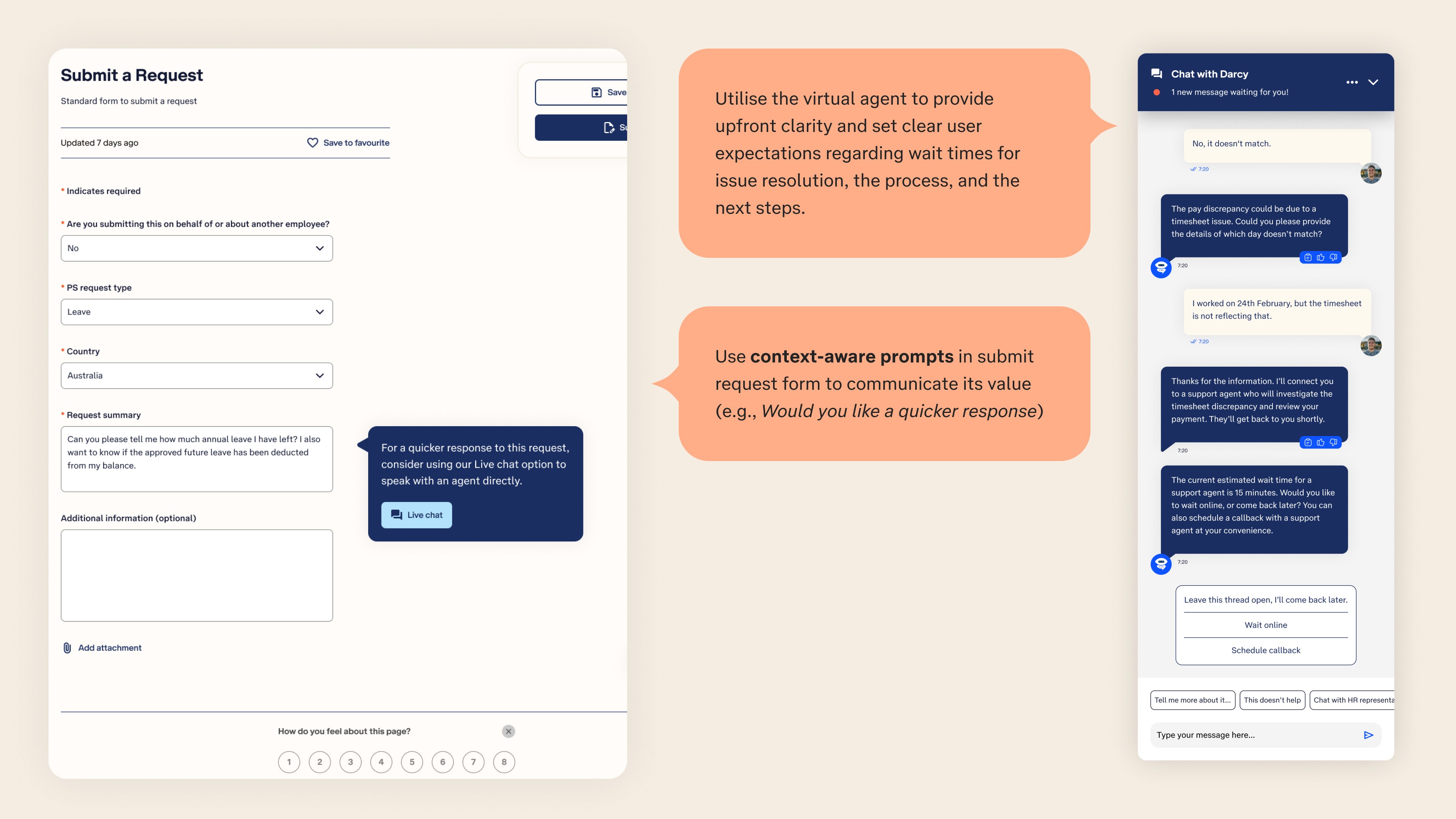
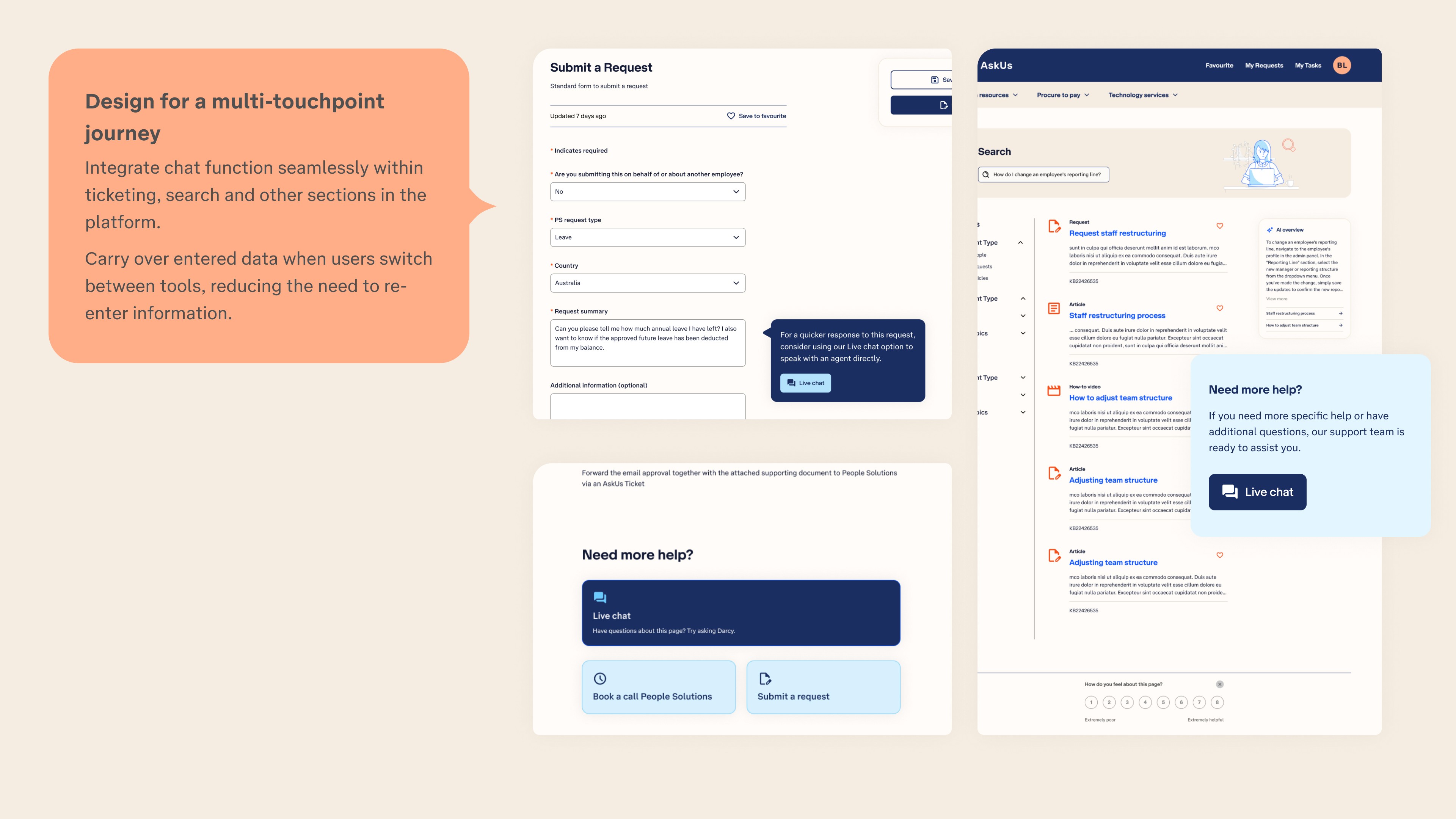
Design recommendation concepts